Every resale listing at Sugar Beach Resort carries the same three words in capital letters: HOTEL ZONED. Buyers researching North Kihei read that as reassurance, and for good reason. Hotel zoning sits outside the political churn that surrounds Maui's Minatoya list, the roughly 7,000 apartment-zoned condo units that are only legally allowed to rent short-term because they met specific county criteria decades ago, criteria that lawmakers have revisited more than once. A hotel-zoned building doesn't carry that exposure. Its right to rent nightly isn't a legal exception. It's the base zoning.
What most buyers don't work out until they're deep in underwriting is that the same classification protecting their rental income is what pushes their loan into a completely different lane, one with a higher down payment, no FHA or VA option, and a lender who has to actually know what a condotel is.
What Hotel Zoning Buys You, and What It Costs You
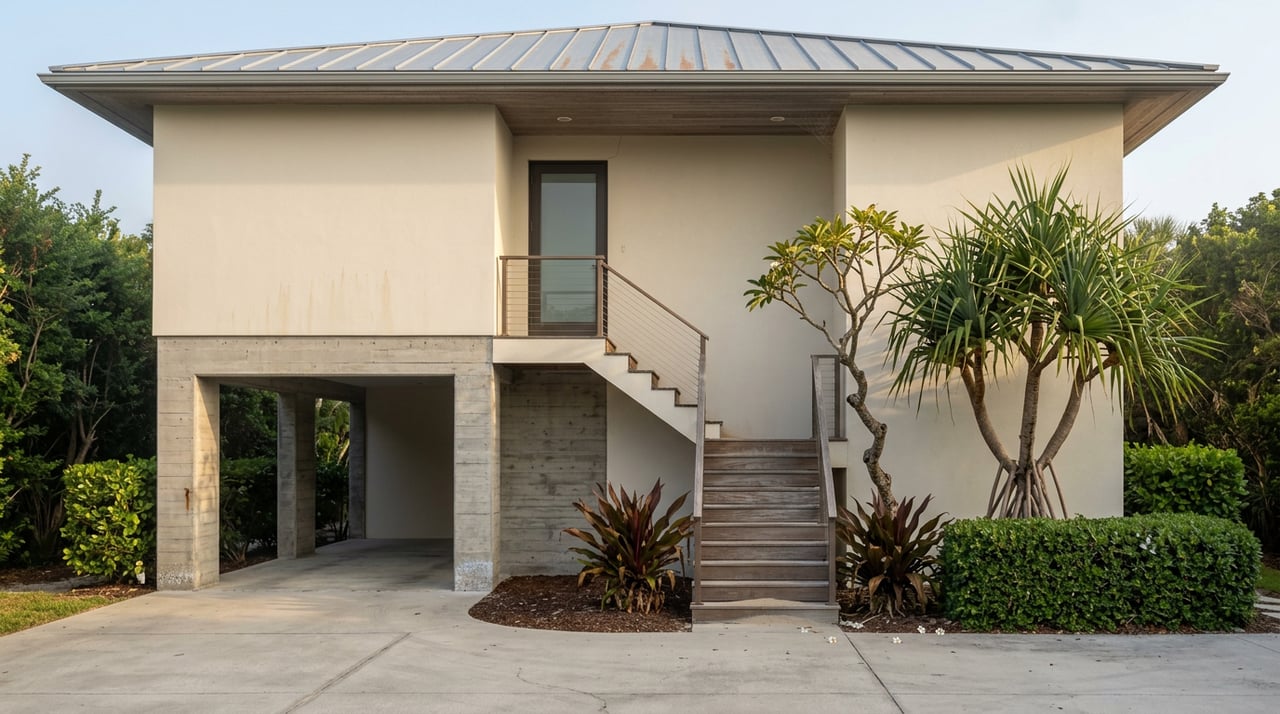
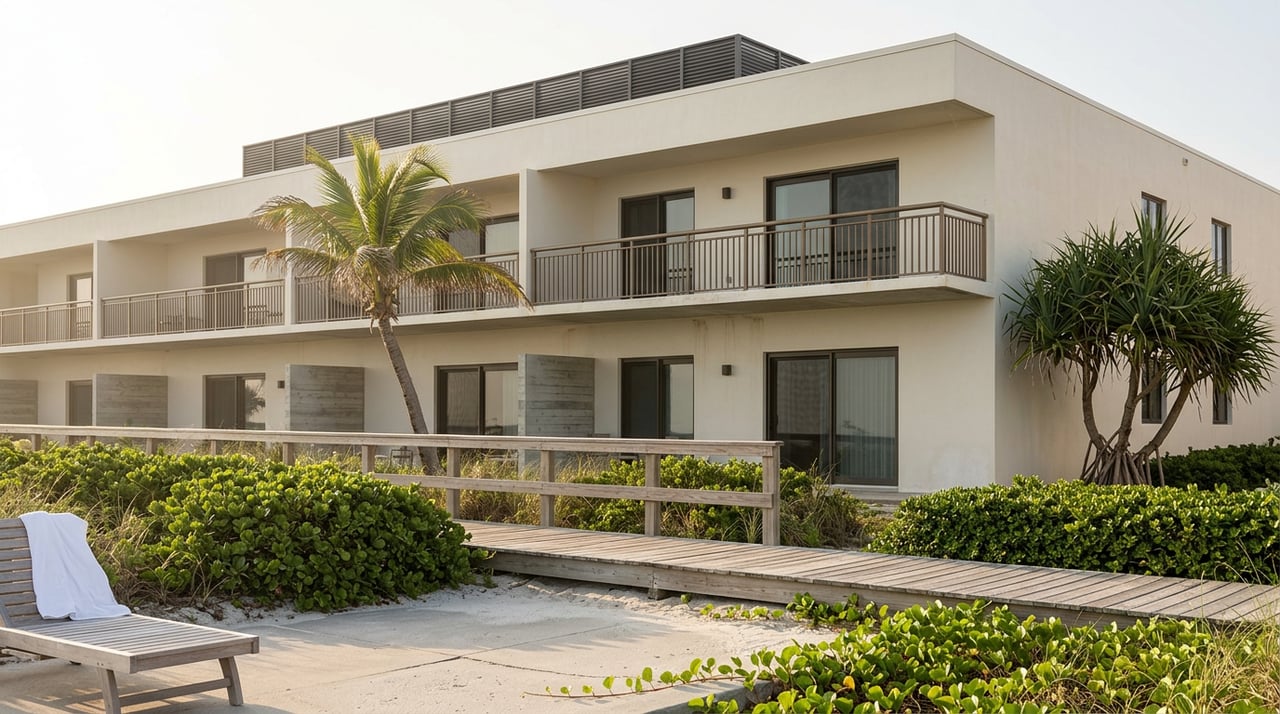
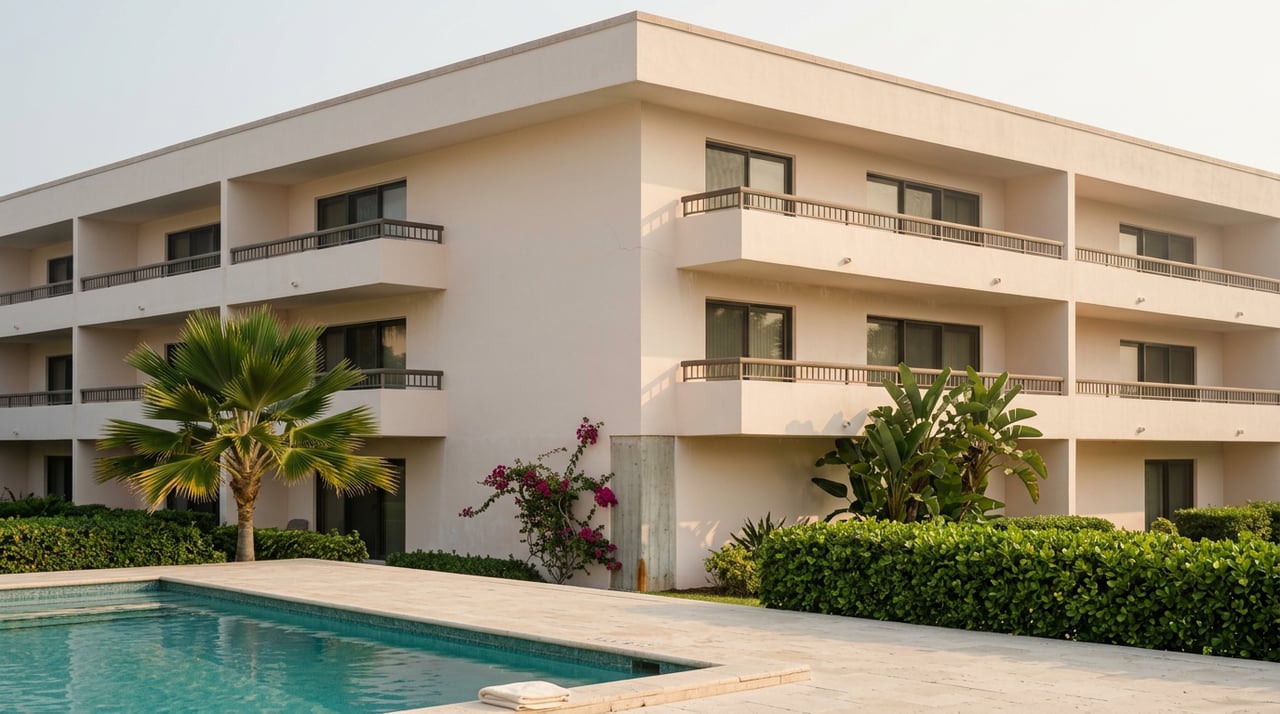
Sugar Beach Resort was built in 1977, two six-story towers holding 218 units on roughly 4.2 acres of oceanfront along Ma'alaea Bay. It runs with an activities office, an on-site eatery, a rental management presence, and daily operations closer to a small resort than a residential building. That operational profile, not just the zoning code, is exactly what triggers a lender classification called non-warrantable, and in Sugar Beach's case, a true condotel.
Fannie Mae, Freddie Mac, and the government-backed programs (FHA, VA, USDA) all decline to buy or guarantee loans on condotels. That's not a matter of a lender's internal policy. It's baked into the agency guidelines themselves. A veteran buyer with full VA eligibility, someone the brand's own client base includes plenty of, cannot use that benefit here. Not because of anything about their service or their credit. The building itself doesn't qualify for the program, regardless of the borrower.
The workaround most Maui lenders point buyers toward is a DSCR loan, short for debt service coverage ratio. Instead of qualifying you on tax returns and W-2s, the lender qualifies the property: does the projected rental income cover the mortgage payment? According to Maui-based mortgage guidance published in July 2026, DSCR terms for hotel-zoned and short-term-rental condos typically run 20 to 25 percent down with a credit score of 660 or higher, and rates land modestly above a conventional loan. Lenders offering these programs generally apply about a 10 percent reduction to gross rental income first, to cover cleaning, furnishings, and advertising, before deciding whether the math pencils.
Compare that to a standard second-home purchase elsewhere on Maui, where 10 percent down is achievable on a conventional loan, or a conforming loan limit of $1,299,500 for 2026, the highest in the state, that lets a buyer stay in agency pricing on a surprisingly large purchase. None of that applies once a building is classified as a condotel. The zoning that makes Sugar Beach a legally bulletproof rental also removes it from that entire conventional financing world.
| Financing Path | Typical Down Payment | Applies to Sugar Beach? |
|---|---|---|
| Conventional second home | Around 10% | No, non-warrantable |
| FHA or VA | 0% to 3.5% | Not eligible for condotels |
| DSCR (income-qualified) | 20% to 25% | Yes, most common route |
Back in 2023, the last year with a clean before-and-after comparison across zoning types, hotel-zoned condos on Maui sold for a median $1,445 per square foot against $800 for standard condos, and a two-bedroom hotel-zoned unit carried a median price roughly 22 percent above a comparable Minatoya-list unit. Buyers were already paying a premium for the zoning's legal certainty years before they discovered the second cost waiting at the bank.
What $1,137 to $1,517 a Month Actually Covers
Recent listings at Sugar Beach show maintenance fees ranging from around $1,137 to $1,517 a month depending on unit size and floor. That range looks steep until you see what's bundled in. Sugar Beach's fees include all electricity, central air conditioning, water, sewer, garbage, basic cable, and Wi-Fi, on top of the usual insurance and reserve contributions. Plenty of Kihei condos leave electricity and AC as a separate utility bill on top of the HOA fee. Sugar Beach folds it all into one number, which is part of why that number runs higher than a bare-bones building nearby.
The building also has a documented history of at least one special assessment, levied to cover exterior stucco repairs and a full overhaul of the central air conditioning system, according to a Maui real estate resource that tracks assessment activity across the island. That's the kind of capital project that shows up when reserves can't fully absorb the cost of maintaining a concrete building two blocks from saltwater for nearly five decades. It isn't a reason to avoid the building. It's a reason to ask, specifically and in writing, what the reserve study says today and whether that project is fully paid off or still being collected.
Sugar Beach's own site posts something smaller but telling: every September, the pool closes for one to two weeks of routine maintenance, a pattern the building has kept for years running (the 2025 closure ran September 8 through September 24). A building that schedules its own pool shutdown a year in advance is a building that runs on a maintenance calendar rather than crisis repairs. That's a good sign. It doesn't substitute for reviewing the actual reserve numbers.
The Documents That Matter More Than the Listing Photos
Before waiving a financing contingency on a hotel-zoned unit anywhere on Maui, and Sugar Beach specifically, the resale package is where the real information lives, not the listing description.
- Current reserve study and percent funded. This tells you whether the association is actually saving enough for the next roof, elevator, or AC replacement, or whether another special assessment is likely.
- Board meeting minutes from the last 12 to 24 months. Assessments and insurance renewals get discussed here long before they show up as a line item on your bill.
- Current insurance certificate and master policy deductible. In Hawaii, wind and hurricane deductibles are often percentage-based rather than flat dollar amounts, and a large deductible with thin reserves is exactly what triggers the next special assessment after a claim.
- HOA delinquency rate. Lenders flag any project where more than 10 percent of owners are behind on dues. It's one of the fastest ways a loan gets denied mid-escrow.
- Confirmation from a Hawaii-based lender that they've closed a loan in this specific building recently. A pre-approval letter from a mainland bank is close to worthless if that bank doesn't lend on condotels, and that often doesn't surface until underwriting is already underway.
None of this is unique to Sugar Beach. It's the standard due diligence for any hotel-zoned Kihei building. What makes it worth spelling out here is that Sugar Beach's specific mix, a nearly 50-year-old concrete structure, full utility bundling, and a real assessment history, makes every one of these documents more consequential than they'd be at a newer, smaller building down the road.
A Few Questions Worth Asking Before You Write an Offer
Does hotel zoning at Sugar Beach protect me from future Maui County short-term rental restrictions? It insulates the building from the Minatoya-list debate specifically, since that zoning isn't the exception-based rental permission apartment-zoned buildings rely on. Zoning security and mortgage eligibility are two separate questions, though, and confirming one doesn't answer the other.
Can I use a VA loan here? No. Condotel and non-warrantable buildings don't meet Fannie Mae or Freddie Mac's condo project requirements, and VA financing is tied to that same agency approval. This applies regardless of the borrower's individual eligibility.
What down payment should I actually plan for? Budget for the 20 to 25 percent range tied to DSCR financing rather than the 10 percent a standard second-home buyer might expect elsewhere on Maui. Confirming this early with a local lender avoids a scramble late in escrow.
Sugar Beach Resort is a legitimate, well-run building with a beach most people on Maui still consider a local secret. The zoning that makes it a safe long-term rental play is real. So is the financing friction that comes with it. Knowing both before you write an offer, rather than discovering the second one during underwriting, is the difference between a smooth close and a scramble for a new loan program with three weeks left on your contract.
If you're weighing a hotel-zoned condo at Sugar Beach or anywhere else in South Maui, Laurie Keyhani has spent years inside the hospitality side of this market before moving into real estate, and knows exactly which lenders actually close these loans. Let's Connect.